Artificial Intelligence (AI) – The Future of Technology

Artificial Intelligence (AI) is revolutionizing the way we live, work, and interact with technology. In this article, we cover its history, types, applications, advantages, and future trends.
Overview of Artificial Intelligence

Artificial Intelligence is a branch of computer science that creates systems capable of performing tasks requiring human intelligence. This includes learning, reasoning, problem-solving, and natural language processing. AI is the driving force behind innovations such as voice assistants, self-driving cars, and advanced medical diagnostics.
History of Artificial Intelligence
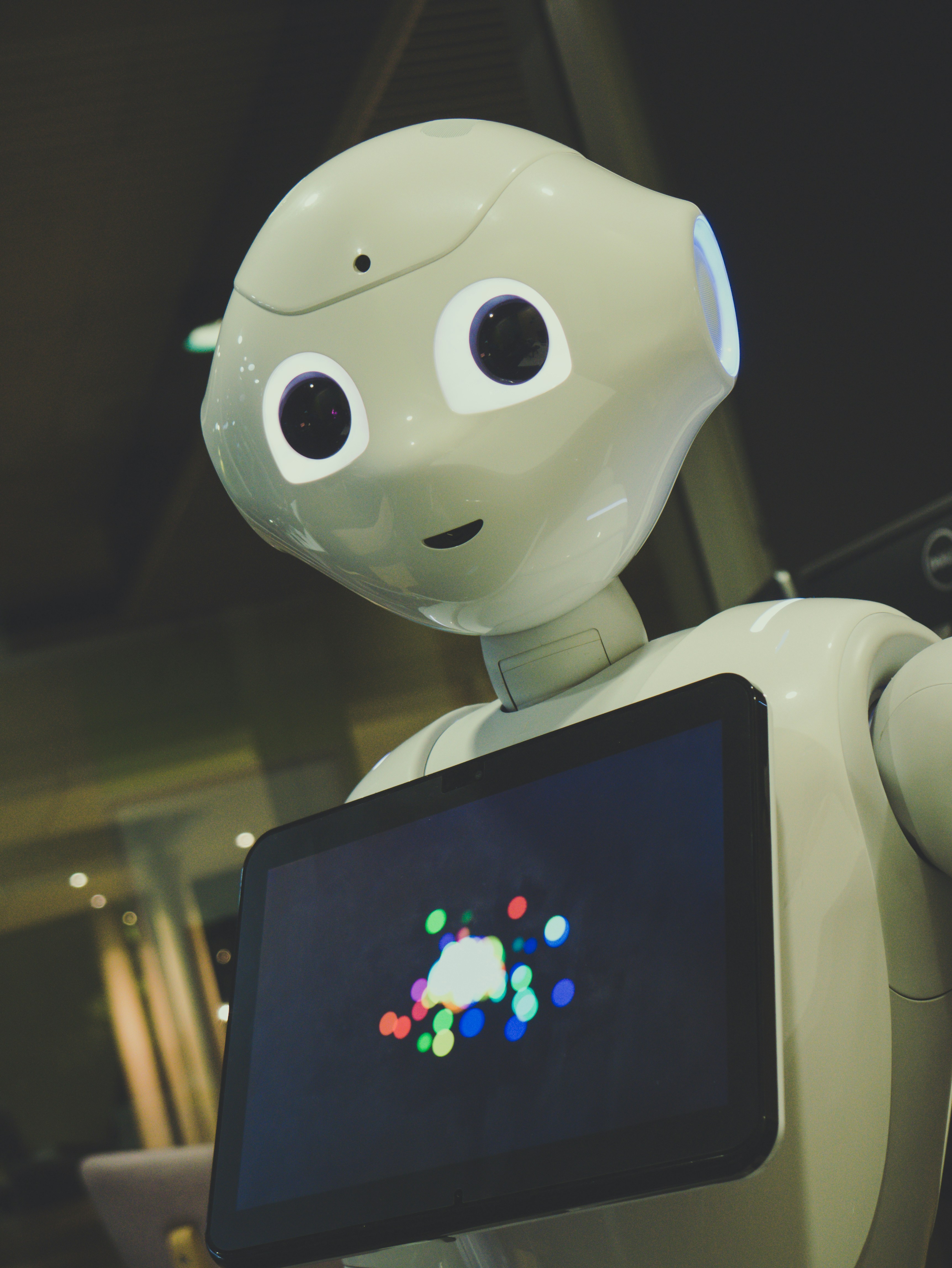
- 1950s: Alan Turing introduces the concept of the “Turing Test.”
- 1960s–1970s: Development of ELIZA and Shakey the robot.
- 1980s–1990s: Rise of expert systems using rule-based logic.
- 2000s–Present: Machine learning and deep learning lead AI to breakthroughs in speech, vision, and robotics.
Types of Artificial Intelligence

- Narrow AI: Specialized for specific tasks like chatbots and recommendation engines.
- General AI: Hypothetical AI that can perform any intellectual task like a human.
- Superintelligent AI: A theoretical AI surpassing human intelligence in all areas.
Applications of Artificial Intelligence

- Healthcare: Early disease detection, medical imaging, and personalized treatments.
- Transportation: Autonomous vehicles, traffic optimization.
- Business: Predictive analytics, automated customer service.
- Entertainment: AI in games, movie recommendations.
- Security: Fraud prevention, facial recognition.
Advantages of Artificial Intelligence

- Increased efficiency and productivity.
- Accurate data analysis and decision-making.
- Reduction of human error.
Challenges and Concerns

- Job losses due to automation.
- Bias and fairness issues in AI algorithms.
- Privacy concerns and potential misuse.
Future of Artificial Intelligence

AI is expected to transform industries with advancements in conversational AI, robotics, and scientific research. Governments and organizations are working to develop ethical AI regulations to ensure responsible growth.
Tags: Artificial Intelligence, AI Technology, Machine Learning, Deep Learning, AI in Healthcare, AI Applications, Future of AI
© 2025 Your Website Name
Artificial Intelligence (AI) – History, Types, Applications & Future
font-family: Arial, sans-serif;
margin: 20px;
line-height: 1.6;
}
img {
width: 100%;
height: auto;
border-radius: 8px;
display: block;
margin: 15px 0;
}
header, section, footer {
margin-bottom: 30px;
}
Artificial Intelligence (AI) – The Future of Technology
Artificial Intelligence (AI) is revolutionizing the way we live, work, and interact with technology. In this article, we cover its history, types, applications, advantages, and future trends.
Overview of Artificial Intelligence
Artificial Intelligence is a branch of computer science that creates systems capable of performing tasks requiring human intelligence. This includes learning, reasoning, problem-solving, and natural language processing. AI is the driving force behind innovations such as voice assistants, self-driving cars, and advanced medical diagnostics.
History of Artificial Intelligence
- 1950s: Alan Turing introduces the concept of the “Turing Test.”
- 1960s–1970s: Development of ELIZA and Shakey the robot.
- 1980s–1990s: Rise of expert systems using rule-based logic.
- 2000s–Present: Machine learning and deep learning lead AI to breakthroughs in speech, vision, and robotics.
Types of Artificial Intelligence
- Narrow AI: Specialized for specific tasks like chatbots and recommendation engines.
- General AI: Hypothetical AI that can perform any intellectual task like a human.
- Superintelligent AI: A theoretical AI surpassing human intelligence in all areas.
Applications of Artificial Intelligence
- Healthcare: Early disease detection, medical imaging, and personalized treatments.
- Transportation: Autonomous vehicles, traffic optimization.
- Business: Predictive analytics, automated customer service.
- Entertainment: AI in games, movie recommendations.
- Security: Fraud prevention, facial recognition.
Advantages of Artificial Intelligence
- Increased efficiency and productivity.
- Accurate data analysis and decision-making.
- Reduction of human error.
Challenges and Concerns
- Job losses due to automation.
- Bias and fairness issues in AI algorithms.
- Privacy concerns and potential misuse.
Future of Artificial Intelligence
AI is expected to transform industries with advancements in conversational AI, robotics, and scientific research. Governments and organizations are working to develop ethical AI regulations to ensure responsible growth.
 Game Bait
Leave a comment