Tag: technology

  • How to Make a Bootable SD Card for Raspberry Pi

    This guide explains everything in simple words, step by step, so even someone who has never used
    Raspberry Pi before can follow it confidently.
    If you follow this guide carefully, your Raspberry Pi will boot successfully on the first try.

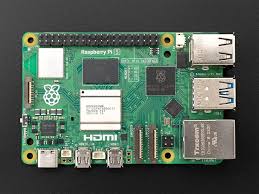
    1. What Is a Raspberry Pi?
      A Raspberry Pi is a small single-board computer. It does not have a built‑in hard disk like a laptop or PC.
      Instead, it uses a microSD card as its main storage.
      This SD card stores: – The operating system – System files – Your programs – Your data
      Without an SD card, Raspberry Pi cannot start.
    2. What Does “Bootable SD Card” Mean?
      A bootable SD card means: – It contains an operating system – The Raspberry Pi can read it – The Pi can
      start (boot) from it
      When power is supplied: 1. Raspberry Pi checks the SD card 2. Finds the boot files 3. Loads the
      operating system 4. Shows the desktop or terminal
      If the SD card is not bootable, you may see: – Red LED only – No display – Black screen
      1
    3. Things You Must Have (Very Important)
      Hardware Requirements
      You must have these items:
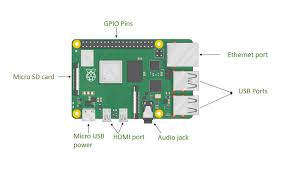
      Raspberry Pi Board (any model)
      Pi 3 / Pi 4 / Pi 5
      Pi Zero / Zero 2 W
      MicroSD Card
      Minimum: 16 GB
      Recommended: 32 GB or more
      Power Supply
      Use official or good quality adapter
      Low power causes boot failure
      SD Card Reader
      USB card reader or laptop slot
      Display & Cable (optional but helpful)
      HDMI cable
      Monitor or TV
    4. Choosing the Right SD Card (Do Not Ignore This)
      Bad SD cards cause 90% of Raspberry Pi boot problems.
      Recommended Specifications
      Speed: Class 10 / UHS‑1
      Brand: SanDisk, Samsung, Kingston
      Avoid unknown or fake cards
      Tip: If Raspberry Pi boots slowly or crashes, change the SD card first.
    5. Operating System for Raspberry Pi
      An operating system (OS) is required to control hardware and software.
      Best OS for Beginners
      Raspberry Pi OS (Official) – Stable – Easy to use – Full desktop support
      Available versions: – 32‑bit → Older models – 64‑bit → Newer models (Pi 4, Pi 5)
      Always choose Raspberry Pi OS with Desktop if you are new.
    6. Download Raspberry Pi Imager (Official Tool)
      Raspberry Pi Imager is the easiest and safest way to make a bootable SD card.
      It: – Downloads the OS automatically – Writes it correctly – Verifies files – Reduces errors
      Install it on: – Windows – macOS – Linux
    7. Insert SD Card into Computer
      Insert microSD card into card reader
      Connect card reader to computer
      Ensure the card is detected
      Backup data if needed
      Warning: SD card will be fully erased.
    8. Open Raspberry Pi Imager (Understanding the Screen)
      When you open the software, you will see three buttons:
      Choose Device → Select Raspberry Pi model
      Choose OS → Select operating system
      Choose Storage → Select SD card
      These steps prevent mistakes.
    9. Select Raspberry Pi Model
      Click Choose Device and select your model.
      Why this matters: – Correct boot files – Correct kernel – Best compatibility
      Example: – Raspberry Pi 4 – Raspberry Pi Zero 2 W
    10. Select Operating System (Detailed Explanation)
      Click Choose OS.
      Recommended options:
      Raspberry Pi OS (64‑bit) → Best performance
      Raspberry Pi OS (32‑bit) → Stable, older models
      Other OS options (advanced users): – Ubuntu – LibreELEC – RetroPie
      Beginner rule: Stick to Raspberry Pi OS.
    11. Select Storage Carefully
      Click Choose Storage and select your SD card.
      IMPORTANT: – Selecting the wrong drive can erase your hard disk – Always double‑check size and
      name
    12. Advanced Settings (EXTREMELY IMPORTANT)
      Press: – CTRL + SHIFT + X (Windows/Linux) – CMD + SHIFT + X (macOS)
      Configure Before Writing
      You can set:
      Username & password
      Enable SSH (remote access)
      Configure Wi‑Fi
      Time zone
      Keyboard layout
      Hostname
      This saves a lot of time later.
    13. Writing the OS to SD Card
      Click Write
      Confirm erase warning
      Wait patiently (5–10 minutes)
      Verification will run automatically
      Do not remove the SD card during writing.
    14. Safely Remove SD Card
      After completion: – Click eject – Remove SD card safely
      Removing it unsafely can corrupt files.
    15. Booting the Raspberry Pi (First Time)
      Insert SD card into Raspberry Pi
      Connect HDMI
      Connect keyboard & mouse
      Plug power supply
      The Raspberry Pi will: – Show boot screen – Load OS – Display desktop or terminal
      Congratulations! Your Pi is running.
    16. First Boot Setup Explained
      On first boot: – Language selection – Country & Wi‑Fi – Password confirmation – Software update
      Let updates finish for best stability.
    17. Common Problems & Easy Fixes
      Problem: No Display
      Try HDMI port 0
      Check power adapter
      Re‑flash SD card
      Problem: Red Light Only
      Bad SD card
      OS not written properly
      Problem: Slow Boot
      Low‑quality SD card
      Use faster card
    18. Best Practices (Very Useful Tips)
      Always shut down properly
      Keep backups
      Use official power supply
      Keep OS updated
    19. Frequently Asked Questions (FAQ – SEO Boost)
      Q1. How do I make a bootable SD card for Raspberry Pi?
      You can make a bootable SD card for Raspberry Pi by using Raspberry Pi Imager, selecting your Pi
      model, choosing Raspberry Pi OS, and writing it to a microSD card.
      Q2. Which SD card is best for Raspberry Pi?
      A Class 10 or UHS‑1 microSD card from brands like SanDisk or Samsung (32GB or higher) is best for
      Raspberry Pi.
      Q3. Why is my Raspberry Pi not booting from SD card?
      Common reasons include a corrupted SD card, low‑quality power supply, wrong OS image, or improper
      flashing.
      Q4. Can I install Raspberry Pi OS without a monitor?
      Yes. Enable SSH and Wi‑Fi using advanced settings in Raspberry Pi Imager for headless setup.
      Q5. Is Raspberry Pi OS free?
      Yes, Raspberry Pi OS is completely free and officially supported.
    20. Final Words (Conclusion – SEO Friendly)
      Making a bootable SD card for Raspberry Pi is the first and most important step to start your
      Raspberry Pi journey. By using the official Raspberry Pi Imager, selecting the correct OS, and using a
      good‑quality SD card, you can avoid most boot problems.
      This step‑by‑step Raspberry Pi bootable SD card guide is designed for beginners, students, and
      hobbyists who want a clear and reliable method.
      Once your Raspberry Pi is running, you can explore programming, Linux learning, home automation,
      servers, robotics, and IoT projects.
      With the right setup, Raspberry Pi becomes a powerful learning and development tool.
      SEO Tip: Keep this article updated, add images with alt text like “Raspberry Pi bootable SD card setup”,
      and interlink related Raspberry Pi tutorials for higher Google ranking.
      Making a bootable SD card for Raspberry Pi is easy when done correctly.

      Once your Raspberry Pi is ready, you can use it for: – Programming – Home automation – Servers –
      Learning Linux – Robotics & IoT
  • Blockchain Technology — Architecture, Consensus, Smart Contracts, and Use Cases

    Blockchain Technology — Architecture, Consensus, Smart Contracts, and Use Cases

    A technical overview of distributed ledger technology, consensus mechanisms, smart contract platforms, scalability approaches, privacy techniques, and primary industry applications.

    Introduction

    Blockchain (or distributed ledger technology, DLT) is a data-structure and consensus-driven platform for maintaining an append-only ledger across mutually distrustful participants. Blocks contain transactions and cryptographic links (hash pointers); consensus protocols ensure a single canonical history despite Byzantine faults in many deployments.

    Architecture & Data Model

    At a high level: transactions are broadcast, validated, assembled into blocks, and appended to the chain. Key elements include Merkle trees for compact proofs, cryptographic signatures for authentication, and peer-to-peer networking for propagation.

    Block Header
    Previous Hash | Timestamp | Nonce | Merkle Root
    Transactions (Merkle Tree)

    tx1 • tx2 • tx3 • …

    Block: header with cryptographic links and a list (Merkle root) summarizing transactions.

    Consensus Mechanisms

    Consensus protocols determine agreement on ledger state. Common classes:

    • Proof-of-Work (PoW): Energy-based, probabilistic finality (Bitcoin).
    • Proof-of-Stake (PoS): Stake-weighted voting, deterministic slashing conditions (Ethereum post-merge).
    • Byzantine Fault Tolerant (BFT) protocols: PBFT, Tendermint — deterministic finality for permissioned networks.
    • Hybrid & Layered: Rollups, optimistic vs fraud-proof designs for scalability.

    Smart Contracts & Execution Models

    Smart contracts are deterministic programs executed by a distributed EVM-like or WASM runtime. Execution models vary: account-based (Ethereum) vs UTXO-based (Cardano extended), and gas/resource metering prevents denial-of-service.

    User Tx
    Mempool / Node
    Execution / Gas Meter
    Transaction flow: signing → mempool → execution with gas metering and state update.

    Scalability & Layer 2

    Main-chain scalability is limited by throughput and latency. Layer-2 solutions include state channels, sidechains, optimistic and ZK rollups that shift computation and storage off-chain while preserving security via fraud or validity proofs.

    Privacy & Cryptography

    Techniques include zero-knowledge proofs (ZK-SNARKs/ZK-STARKs) for private verification, confidential transactions (Pedersen commitments), and threshold signatures for distributed key control.

    Applications

    • Cryptocurrencies and payments
    • Decentralized finance (DeFi): lending, AMMs, synthetic assets
    • Supply chain provenance and tamper-evident records
    • Digital identity and credential verification
    • Tokenization of real-world assets

    References

    1. S. Nakamoto, “Bitcoin: A Peer-to-Peer Electronic Cash System,” 2008.
    2. V. Buterin, “A Next-Generation Smart Contract and Decentralized Application Platform,” 2013 (Ethereum Whitepaper).
    3. ZKP and rollup whitepapers from academic and industry sources.
    © 2025 Your Website Name


  • Edge Computing — Architecture, Use Cases, Challenges, and Trends

    Edge Computing — Architecture, Use Cases, Challenges, and Trends

    This article provides a technical survey of edge computing: definitions, architecture, deployment models (edge, fog, cloud), hardware and software components, orchestration, security and privacy considerations, performance trade-offs, and future directions. Inline SVG diagrams are included for clarity and mobile compatibility.

    Contents

    1. 1. Definition and Motivation
    2. 2. Historical Context
    3. 3. Deployment and Architectural Models
    4. 4. Hardware and Software Components
    5. 5. Orchestration, Management, and Networking
    6. 6. Representative Use Cases
    7. 7. Security, Privacy, and Compliance
    8. 8. Performance Trade-offs and Benchmarks
    9. 9. Challenges and Limitations
    10. 10. Future Directions
    11. References

    1. Definition and Motivation

    Edge computing denotes a distributed computing paradigm that places compute, storage, and analytics resources closer to data sources and end users (the network edge) to reduce latency, conserve bandwidth, improve privacy, and enable location-aware services. The edge complements centralized cloud platforms by executing latency-sensitive or bandwidth-intensive operations locally or in nearby edge data centers, often within a multi-tier continuum (device ⇄ edge node ⇄ regional cloud ⇄ core cloud).

    Primary motivations include sub-10 ms response requirements (industrial control, autonomous vehicles), bandwidth cost reduction (preprocessing video), resilience to intermittent connectivity, and regulatory/data-sovereignty constraints requiring local processing.

    2. Historical Context

    • Client–server & CDN roots: Early attempts to reduce latency via caching and content replication evolved into geographically distributed infrastructure.
    • Fog computing (Cisco, ~2014): Emphasized a layered fog between devices and cloud for IoT.
    • MEC (Mobile Edge Computing): Telecom-driven initiatives placing compute at cellular base stations (now Multi-access Edge Computing, ETSI).
    • Modern trends: Edge-native orchestration (Kubernetes variants), lightweight virtualization (containers & unikernels), and specialized edge accelerators (NPUs, TPUs, VPUs).

    3. Deployment and Architectural Models

    Spectrum from device edge through local/ regional edge to core cloud showing latency and compute tiers.

    Device EdgeSensors, Cameras, Gateways
    Local EdgeOn-prem Servers, MEC at Cell Sites
    Regional EdgePoPs, Micro-DCs
    Core CloudHyperscaler Regions
    Latency: device (µs–ms) → core (10s–100s ms)

    Edge–cloud continuum: workloads may be placed at different tiers according to latency, bandwidth, and regulatory demands.

    3.1 Device Edge

    Comprises sensors, actuators, and embedded systems performing local inference or signal preprocessing. Constraints: limited CPU, memory, intermittent power, and connectivity.

    3.2 Local / On-Prem Edge

    Small servers or gateways co-located in factories, retail stores, or base stations. They provide higher compute and storage than device edge and often run containerized workloads, stream processing, or model serving.

    3.3 Regional Edge / Micro Data Centers

    Serves geographic regions with aggregated compute and storage, bridging local edges to core clouds. Used for regional aggregation, compliance, and moderately latency-sensitive services.

    3.4 Hybrid & Multi-Access Edge

    Integration of telecom MEC, operator-hosted edge, and enterprise on-prem resources enabling low-latency mobile services and localized analytics.

    4. Hardware and Software Components

    4.1 Hardware

    • Edge servers/gateways: Ruggedized x86/ARM servers, single-board computers (e.g., Jetson, Raspberry Pi) for constrained environments.
    • Accelerators: NPUs, DSPs, FPGAs, VPUs for inference and signal processing to reduce energy/latency.
    • Connectivity: Ethernet, Wi-Fi, 4G/5G (including private 5G), LoRaWAN for IoT.
    • Storage: NVMe/flash for low-latency caching; tiered persistence to regional cloud.

    4.2 Software

    • Lightweight virtualization: Containers, Wasm (WebAssembly) runtimes, unikernels for small footprint isolation.
    • Edge OS and orchestration: Kubernetes distributions (K3s, KubeEdge), edge-native orchestrators, and service meshes adapted for intermittent connectivity.
    • Data plane: Stream processors (Flink/Storm-like), inference servers (TensorRT/TensorFlow Lite), and local caches/feature stores.
    • Security stack: TPM/TEE, secure boot, attestation, encrypted storage, zero-trust networking.

    Device drivers to applications layer for a typical edge node.

    Hardware: CPU/ARM, Accelerators, NIC, Storage
    Edge OS / Container Runtime / Wasm Runtime
    Platform Services: Telemetry, Security, Device Mgmt
    Data Plane: Inference Server, Stream Processor, Cache
    Applications: Local Analytics, Control Loops, UI/Agents

    Typical edge node stack showing tight integration from hardware to application layers with platform services for management and telemetry.

    5. Orchestration, Management, and Networking

    Orchestration provides lifecycle management: deployment, health monitoring, updates, and rollback. Edge-specific orchestration must address:

    • Connectivity variability: Support for delayed/partial synchronization and intermittent links.
    • Hierarchical control plane: Local controllers for immediate decisions and regional/cloud controllers for policy and analytics.
    • Lightweight scheduling: Resource-aware scheduling for heterogeneous accelerators and constrained nodes.
    • Networking: SD-WAN, overlay networks, local breakout, split-TCP, and support for QoS and multicast for streaming.

    Local controllers at edge nodes, regional orchestrator, and central cloud controller with synchronization channels.

    Edge Node ALocal Controller
    Edge Node BLocal Controller
    Regional Orchestrator Cloud Controller (Policy, Registry, Global Analytics)

    Hierarchical orchestration enables local autonomy while preserving global coordination and policy enforcement.

    6. Representative Use Cases

    6.1 Industrial Automation and Control

    Real-time control loops (PLC replacement, robotics) requiring deterministic sub-10 ms latencies and local decision-making for safety-critical processes.

    6.2 Autonomous Vehicles and ADAS

    Local sensor fusion and inference for perception and actuation; regional edge supports map updates and fleet analytics.

    6.3 Video Analytics and Smart Cities

    Preprocessing and anonymization of high-volume video streams for traffic management, anomaly detection, and privacy-preserving analytics.

    6.4 AR/VR and Low-Latency Media

    Cloud offloading of compute-heavy rendering while maintaining interactive response via MEC and local edge nodes.

    6.5 Healthcare and Telemedicine

    Edge processing for bedside monitoring, imaging pre-processing, and local inference to reduce PHI exposure and latency.

    6.6 Retail, Supply Chain, and Remote Sites

    Inventory analytics, cashierless stores, equipment monitoring for sites with limited backhaul capacity.

    7. Security, Privacy, and Compliance

    Edge environments introduce attack surface expansion: physically accessible devices, heterogeneity, and dispersed management. Key controls include:

    • Hardware roots of trust: TPM, Secure Enclave, and TEE for attestation and key protection.
    • Secure boot and firmware validation to prevent persistent compromise.
    • Transport encryption: mTLS, DTLS for device-to-edge and edge-to-cloud channels.
    • Local data governance: Data classification and local retention policies to meet residency laws (GDPR, sectoral regulations).
    • Patch management: Robust OTA update mechanisms with rollback and staged rollout to reduce risk.
    • Zero-trust networking: Microsegmentation, identity-based access, and least-privilege policies.

    Operational note: Incident response must be automated and asynchronous-aware: forensic capture, remote triage, and the ability to isolate compromised nodes without disrupting safety-critical operations.

    8. Performance Trade-offs and Benchmarks

    Placement decisions trade latency, bandwidth, cost, privacy, and consistency. Common evaluation metrics include:

    • End-to-end latency (p50/p95/p99) for request–response and control loops.
    • Throughput and packet-per-second for streaming workloads.
    • Cost per inference / cost per GB transferred including egress charges.
    • Availability and failover time under node or link failure.
    • Energy consumption and thermal envelope for remote installations.

    High bandwidth to cloud vs low latency at edge decision regions.
    Bandwidth Requirement →
    Latency (ms) Cloud-preferrable Edge-preferrable

    High-bandwidth non-real-time workloads suit cloud; latency-critical, modest-bandwidth tasks suit edge or regional tiers.

    9. Challenges and Limitations

    • Operational complexity: Heterogeneous hardware and distributed management amplify operational burden compared to centralized cloud.
    • Resource constraints: Constrained CPU/memory/power limits model size and concurrency; need for model compression and lightweight runtimes.
    • Connectivity and consistency: Ensuring data consistency across intermittent connections requires conflict resolution and eventual-consistency patterns.
    • Security at scale: Large fleets increase attack surface and complicate secure key lifecycle management.
    • Economics: Edge deployments have different cost structures (CapEx, site leasing, maintenance) than cloud Opex models.

    10. Future Directions

    • Edge AI acceleration: Dedicated NPUs and quantized models enabling higher on-device inference throughput.
    • Unifying control planes: Standardized APIs and federated orchestration across operators and cloud providers (CNCF/ETSI efforts).
    • Serverless at the edge: Event-driven, ephemeral workload models with fine-grained billing and autoscaling.
    • Energy-aware scheduling: Carbon and power-aware placement, accounting for renewable availability.
    • Edge-to-edge federations: Secure data sharing and model exchange among peer edge nodes for collaborative analytics.

    Multiple edge clusters federating for workload migration and collaborative analytics.

    Edge Cluster A
    Edge Cluster B
    Edge Cluster C Federated APIs: auth, model exchange, workload migration

    Federation among edge clusters supports workload portability and regional collaboration while preserving governance.

    References

    1. F. Bonomi et al., “Fog Computing and Its Role in the Internet of Things,” MCC Workshop on Mobile Cloud Computing, 2012.
    2. ETSI ISG MEC, “Multi-access Edge Computing (MEC) Framework,” ETSI GS MEC, various releases.
    3. G. Premsankar, M. Di Francesco, T. Taleb, “Edge Computing for the Internet of Things: A Case Study,” IEEE Communications Magazine, 2018.
    4. Edge computing and orchestration overviews from CNCF/edge-native projects (KubeEdge, OpenNESS) and telecom whitepapers.
    5. Surveys on edge AI, IoT security, and MEC in contemporary journals.

    Tip: Convert these references to clickable publisher/arXiv links in your CMS to increase credibility and visitor engagement.

    Mobile-first
    Inline SVG Diagrams
    SEO Meta + JSON-LD

    © 2025 Your Website Name


  • Machine Learning — Foundations, Algorithms, Model Evaluation, and MLOps

    Machine Learning — Foundations, Algorithms, Model Evaluation, and MLOps

    This article surveys machine learning (ML) from a technical perspective: learning paradigms, core algorithms, optimization, generalization, deep learning, transformers, evaluation metrics, productionization (MLOps), and ethical considerations. All diagrams are inline SVG to ensure sharp, mobile-first rendering.

    Contents

    1. 1. Introduction
    2. 2. Historical Development
    3. 3. Learning Paradigms
    4. 4. Data and Model Pipeline
    5. 5. Core Algorithms
    6. 6. Generalization, Bias–Variance, and Regularization
    7. 7. Model Evaluation
    8. 8. Deep Learning Architectures
    9. 9. Transformers and Attention
    10. 10. Reinforcement Learning
    11. 11. MLOps and Production Systems
    12. 12. Ethics, Fairness, and Safety
    13. 13. Applications
    14. 14. Limitations and Future Directions
    15. References

    1. Introduction

    Machine learning (ML) is a subfield of artificial intelligence concerned with algorithms that improve their performance at some task through experience. Formally, an algorithm learns from data D with respect to a performance measure P on tasks T if its performance at T, as measured by P, improves with experience from D.

    Modern ML integrates statistical inference, optimization, and systems engineering; large-scale computation (GPUs/TPUs), standardized toolchains, and abundant data enable complex models that generalize across tasks.

    2. Historical Development

    • 1950s–1970s: Perceptron, nearest neighbors, early pattern recognition; theoretical limitations (e.g., XOR for perceptron).
    • 1980s–1990s: Backpropagation for multi-layer networks; SVMs and kernel methods; decision trees and ensemble methods.
    • 2010s–present: Deep learning resurgence via GPUs, large datasets, and better regularization/architectures (CNNs, RNNs/LSTMs, Transformers).

    3. Learning Paradigms

    3.1 Supervised Learning

    Learn a mapping x → y from labeled pairs. Objectives include classification (cross-entropy) and regression (MSE/MAE). Representative models: linear/logistic regression, trees/ensembles, neural networks.

    3.2 Unsupervised Learning

    Discover structure without labels (clustering, density estimation, dimensionality reduction). Methods include k-means, Gaussian mixtures, hierarchical clustering, PCA, t-SNE/UMAP (for visualization).

    3.3 Semi-Supervised and Self-Supervised

    Exploit large unlabeled corpora with limited labels (consistency regularization, pseudo-labeling, contrastive learning, masked modeling).

    3.4 Reinforcement Learning

    Learn policies maximizing cumulative reward through interaction. Formalized by Markov Decision Processes; trained via value-based, policy-gradient, or actor-critic methods.


    Supervised, unsupervised, semi/self-supervised, and RL regions.


    Supervised
    Classification, Regression


    Unsupervised
    Clustering, Density, DR


    Semi/Self-Supervised
    Contrastive, Masked


    Reinforcement Learning
    MDPs, Policy Gradients

    High-level taxonomy of learning paradigms.

    4. Data and Model Pipeline

    End-to-end ML systems encompass data acquisition, labeling, feature engineering, training, evaluation, deployment, and monitoring. Robust pipelines emphasize reproducibility, data/version control, and continuous validation.


    Data → Features → Train → Validate → Deploy → Monitor loop.


    Data

    Feature Eng.

    Train

    Validate

    Deploy

    Monitor

    feedback / drift

    Typical ML lifecycle with a monitoring-to-training feedback loop to address drift.

    5. Core Algorithms

    5.1 Linear and Logistic Models

    Linear regression minimizes ∥y − Xw∥²; logistic regression models P(y=1|x)=σ(wᵀx). Training commonly uses gradient descent with L2/L1 regularization.

    5.2 Decision Trees and Ensembles

    Trees split by impurity reductions (Gini, entropy, variance). Ensembles (Random Forests, Gradient Boosting, XGBoost) reduce variance and bias via bagging/boosting.

    5.3 Kernel Methods

    SVMs maximize margins in feature space induced by kernels (RBF, polynomial). Complexity depends on support vectors; effective in medium-scale settings.

    5.4 Probabilistic Models

    Naïve Bayes, Gaussian mixtures, HMMs, Bayesian networks: emphasize uncertainty modeling and principled inference.


    Training error vs. test error as model complexity increases.
    Model Complexity →
    Error
    Training Error Test Error Optimal Capacity

    Test error is minimized at an intermediate capacity balancing bias and variance.

    6. Generalization, Bias–Variance, and Regularization

    Generalization error reflects a model’s performance on unseen data. Overfitting arises when variance dominates due to excessive capacity or data leakage; underfitting occurs when bias is high.

    • Regularization: L2/L1 penalties, early stopping, dropout, data augmentation.
    • Model selection: Cross-validation, information criteria (AIC/BIC), and validation curves.
    • Calibration: Platt scaling, isotonic regression, temperature scaling for probabilistic outputs.

    7. Model Evaluation


    TP, FP, FN, TN layout with metrics.


    Actual +
    Actual −
    Predicted +
    Predicted −
    TP
    FP
    FN
    TN

    Derived metrics: Precision=TP/(TP+FP), Recall=TP/(TP+FN), F1=2·(P·R)/(P+R).


    TPR vs FPR with area under the curve.

    False Positive Rate
    True Positive Rate ROC (AUC≈0.90)

    ROC illustrates threshold-independent performance; PR curves are preferred for class imbalance.

    8. Deep Learning Architectures


    Input, hidden, and output layers with weighted connections.


    Input


    Hidden


    Output


    Feedforward MLP: parameters learned via backpropagation and stochastic gradient descent.

    8.1 Convolutional Networks (CNNs)

    Exploit spatial locality via weight sharing and receptive fields; key blocks include convolution, activation, pooling, and normalization. Used in vision and, with adaptations, audio/text.

    8.2 Recurrent Networks (RNNs/LSTMs/GRUs)

    Process sequences with recurrent connections; LSTM/GRU mitigate vanishing gradients via gating mechanisms. Supplanted in many tasks by attention-based models.

    8.3 Regularization and Optimization

    BatchNorm/LayerNorm, dropout, data augmentation, label smoothing, weight decay; optimizers include SGD with momentum, Adam/AdamW, RMSProp; learning-rate schedules (cosine decay, warmup).

    9. Transformers and Attention

    Transformers employ self-attention to model long-range dependencies without recurrence. Multi-head attention attends to different representation subspaces; positional encodings inject order information. Scaling laws relate performance to compute, data, and model size.


    Q, K, V projections with attention weights and output.


    Inputs
    Q
    K
    V


    softmax(QKᵀ/√d)
    Attention · V Feedforward

    Self-attention computes context-aware representations; multi-head attention repeats the mechanism with independent projections.

    10. Reinforcement Learning

    An RL problem is defined by an MDP (S, A, P, R, γ). Solutions include dynamic programming (when models are known), Monte Carlo, temporal-difference methods (Q-learning), and policy gradients (REINFORCE, PPO). Exploration–exploitation trade-offs are handled via ε-greedy, UCB, or entropy regularization.

    11. MLOps and Production Systems

    MLOps integrates software engineering and data engineering practices for reliable ML at scale: versioning, CI/CD for models, feature stores, model registries, canary/blue-green deployments, monitoring (latency, drift, bias), and rollback procedures.


    Request → API → Feature Store → Model Server → Cache/DB → Metrics.

    Client
    API
    Feature Store
    Model Server
    DB
    Cache

    Telemetry → metrics, tracing, drift

    Serving architecture with feature retrieval, model hosting, data stores, caching, and telemetry.

    Latency (p95)

    Throughput (RPS)

    SLA/SLO

    Drift/Bias Monitors

    12. Ethics, Fairness, and Safety

    • Dataset bias: Representation imbalances propagate to predictions; mitigation via reweighting, resampling, or adversarial debiasing.
    • Fairness metrics: Demographic parity, equalized odds, equal opportunity; context-dependent trade-offs.
    • Explainability: SHAP/LIME, counterfactuals, feature attributions for transparency.
    • Safety & robustness: Adversarial examples, distribution shift, and fail-safe design.
    • Privacy: Differential privacy, federated learning, secure aggregation.

    13. Applications

    13.1 Computer Vision

    Classification, detection, segmentation, tracking; applications in medical imaging, autonomous driving, retail, and security.

    13.2 Natural Language Processing

    Language modeling, translation, summarization, retrieval-augmented generation; pretraining and fine-tuning paradigms dominate.

    13.3 Time Series and Forecasting

    Demand prediction, anomaly detection, predictive maintenance; models include ARIMA, Prophet, RNN/Transformer variants.

    13.4 Recommender Systems

    Matrix factorization, factorization machines, deep two-tower models; online learning with explore–exploit strategies.

    13.5 Healthcare & Science

    Risk scoring, diagnostic support, protein structure/molecule property prediction; stringent requirements on data governance and validation.

    13.6 Finance

    Fraud detection, credit scoring, algorithmic trading, risk modeling; high demands on interpretability and auditability.

    14. Limitations and Future Directions

    • Data dependence: Performance hinges on data quality/quantity; synthetic data and self-supervised learning alleviate label scarcity.
    • Computational cost: Training large models is energy-intensive; efficiency research targets distillation, pruning, quantization, and better architectures.
    • Generalization under shift: Robustness to domain shift and OOD inputs remains challenging; techniques include domain adaptation and invariance.
    • Future: Foundation models, multimodal learning, causal inference, neuro-symbolic integration, and federated/edge deployment.

    References

    1. C. M. Bishop, Pattern Recognition and Machine Learning, Springer, 2006.
    2. T. Hastie, R. Tibshirani, J. Friedman, The Elements of Statistical Learning, 2nd ed., 2009.
    3. I. Goodfellow, Y. Bengio, A. Courville, Deep Learning, MIT Press, 2016.
    4. V. N. Vapnik, Statistical Learning Theory, Wiley, 1998.
    5. A. Vaswani et al., “Attention Is All You Need,” NeurIPS, 2017.
    6. R. Sutton, A. Barto, Reinforcement Learning: An Introduction, 2nd ed., 2018.
    7. Evaluation best practices and fairness overviews from recent surveys (link to your preferred sources in your CMS).

    Tip: In your CMS, convert each reference to a clickable link (publisher or arXiv) for credibility and better engagement.

    Mobile-first
    Inline SVG Diagrams
    SEO Meta + JSON-LD

    © 2025 Your Website Name


  • Quantum Computing — Principles, Architectures, Algorithms, and Outlook

    Quantum Computing — Principles, Architectures, Algorithms, and Outlook

    This article provides a neutral, technical overview of quantum computing, covering physical principles, computational models, hardware platforms, algorithms, error correction, applications, and future directions. All diagrams are inline SVG for fast, mobile-first rendering.

    Contents

    1. 1. Introduction
    2. 2. Historical Development
    3. 3. Quantum Principles for Computation
    4. 4. Qubits and the Bloch Sphere
    5. 5. Quantum Gates and Circuits
    6. 6. Algorithms
    7. 7. Hardware Implementations
    8. 8. Noise, Decoherence, and Error Correction
    9. 9. Applications and Industry Use
    10. 10. Limitations and Outlook
    11. References

    1. Introduction

    Quantum computing is a model of computation that exploits quantum-mechanical phenomena—superposition, entanglement, and interference—to process information. A quantum computer operates on qubits, which are two-level quantum systems described by complex probability amplitudes. Unlike classical bits, which take values in {0,1}, qubits reside in a continuous state space on the Bloch sphere, enabling parallel exploration of computational paths when manipulated coherently.

    Practical quantum devices are currently in the NISQ (Noisy Intermediate-Scale Quantum) era, featuring tens to a few thousand physical qubits with limited coherence times and gate fidelities. Progress is driven by advances in materials, control electronics, cryogenics, photonics, and error-correcting codes, with a long-term target of fault-tolerant, error-corrected computation.

    2. Historical Development

    • 1980s: Feynman and Benioff propose quantum mechanical models of computation; Deutsch formalizes the universal quantum Turing machine.
    • 1994–1996: Shor’s algorithm demonstrates polynomial-time factoring on an ideal QC; Grover introduces a quadratic-speedup search algorithm.
    • 2000s: Experimental demonstrations of small-scale algorithms using NMR, trapped ions, and superconducting circuits.
    • 2010s–present: Rapid scaling of superconducting and trapped-ion platforms; industrial roadmaps toward quantum advantage and fault tolerance.

    3. Quantum Principles for Computation

    3.1 State Vectors and Measurement

    A single qubit state is |ψ⟩ = α|0⟩ + β|1⟩ with complex amplitudes α, β satisfying |α|² + |β|² = 1. Measurement in the computational basis yields outcomes 0 or 1 with probabilities |α|² and |β|², collapsing the state accordingly.

    3.2 Superposition and Interference

    Superposition enables coherent linear combinations of basis states. Interference (constructive/destructive) arises when amplitudes are manipulated by unitary operations, amplifying correct outcomes in algorithms like Grover’s.

    3.3 Entanglement

    Entanglement is non-classical correlation between subsystems. For two qubits, the Bell state |Φ⁺⟩ = (|00⟩ + |11⟩)/√2 cannot be factored into single-qubit states. Entanglement is a resource for teleportation, error correction, and many algorithms.

    4. Qubits and the Bloch Sphere

    Bloch Sphere
    Unit sphere with |0>, |1> poles, equator states, azimuthal and polar angles indicating a general qubit state.


    |0⟩
    |1⟩
    |+⟩
    |−⟩

    θ

    φ

    Bloch sphere parameterization: |ψ⟩ = cos(θ/2)|0⟩ + e^{iφ} sin(θ/2)|1⟩. Poles correspond to basis states; equator states are equal superpositions with varying phase.

    Physical realizations encode qubits in diverse degrees of freedom (charge/flux in superconductors, electronic/phonon states in ions, polarization/path for photons, spin states in quantum dots/defects). Coherence times and control fidelities vary by platform.

    5. Quantum Gates and Circuits

    Common Single-Qubit Gates
    X, Y, Z, H, S, and T gates with matrix definitions.

    X = [[0, 1],[1, 0]] Y = [[0, -i],[i, 0]] Z = [[1, 0],[0, -1]]
    H = (1/√2)[[1, 1],[1, -1]] S = [[1, 0],[0, i]] T = [[1, 0],[0, e^{iπ/4}]]
    Rx(θ) = e^{-i θ X/2}, Ry(θ) = e^{-i θ Y/2}, Rz(θ) = e^{-i θ Z/2}

    Single-qubit Clifford and non-Clifford gates; rotations implement arbitrary SU(2) operations.

    Entangling Gates
    CNOT and CZ symbols and truth tables.

    CNOT

    CZ


    Control Target | Output
    00 → 00
    01 → 01
    10 → 11
    11 → 10

    Two-qubit entangling gates enable universal computation with single-qubit rotations.

    Bell State Circuit
    Apply H on qubit 0, CNOT with control 0 and target 1, measure both.

    q0
    q1

    H

    M(q0)

    M(q1)

    Bell state preparation: |00⟩ --H on q0--> (|00⟩+|10⟩)/√2 --CNOT--> (|00⟩+|11⟩)/√2. Measurements are perfectly correlated.

    6. Algorithms

    6.1 Shor’s Factoring Algorithm

    Shor’s algorithm reduces integer factoring to order-finding via modular exponentiation on a superposition and estimation of the period using the Quantum Fourier Transform (QFT). The asymptotic complexity is polynomial in the number of input bits, threatening RSA under fault-tolerant conditions.

    6.2 Grover’s Search

    Grover’s algorithm provides a quadratic speedup for unstructured search by iteratively applying an oracle and a diffusion operator, rotating the state vector toward the marked solution. Complexity: O(√N) queries for an N-element database.

    6.3 Simulation of Quantum Systems

    Quantum phase estimation and Trotterized time evolution enable efficient simulation of local Hamiltonians, a classically hard task. Applications include molecular energies, reaction pathways, and materials discovery.

    6.4 Variational and NISQ-Era Methods

    Hybrid quantum-classical algorithms—VQE, QAOA—optimize parametrized circuits using classical optimizers. They trade circuit depth for sampling costs and are well-suited to near-term devices.

    Grover Amplitude Amplification
    Rotation in the 2D subspace spanned by |w⟩ (marked) and |s⟩ (uniform state).

    |s⟩

    |w⟩

    iterations

    Each Grover iteration rotates the state toward the marked vector |w⟩, increasing success probability.

    7. Hardware Implementations

    7.1 Superconducting Circuits

    Superconducting qubits (e.g., transmons) are nonlinear oscillators at millikelvin temperatures, controlled by microwave pulses. Advantages include fast gate times (tens of ns) and lithographic scalability; limitations include crosstalk, coherence limited by materials and two-level systems, and complex cryogenics.

    7.2 Trapped Ions

    Ionic qubits use hyperfine/electronic states of ions confined in electromagnetic traps. Laser-mediated gates exploit shared motional modes. Benefits include long coherence and high fidelities; challenges involve scaling, laser control, and mode crowding.

    7.3 Photonic Platforms

    Photonic qubits encode information in polarization, time-bin, or path. Room-temperature operation and low decoherence make them appealing for communications and measurement-based computation; deterministic two-qubit interactions are non-trivial.

    7.4 Neutral Atoms and Rydberg Arrays

    Neutral atoms trapped in optical tweezers use Rydberg interactions for fast entangling gates. Arrays are reconfigurable and naturally support 2D connectivity; current work targets gate fidelity and control uniformity.

    7.5 Topological Approaches

    Topological qubits aim to localize information non-locally (e.g., Majorana modes), providing intrinsic protection against local noise. While promising for fault tolerance, unambiguous experimental realization is ongoing.

    8. Noise, Decoherence, and Error Correction

    Quantum states couple to the environment via amplitude damping, phase damping, and depolarizing channels. Gate errors are modeled by CPTP maps. Fault tolerance requires encoding logical qubits into many physical qubits with syndrome extraction and active correction.

    Surface Code (Conceptual)
    2D lattice with data and ancilla qubits measuring X and Z stabilizers.


    Surface code:
    • Data qubits on vertices
    • Ancillas measure X/Z stabilizers
    • Logical operators span the lattice
    • Threshold ~ 10⁻² (order, platform-dependent)

    Conceptual surface-code layout: syndrome extraction detects X/Z errors; increasing code distance reduces logical error rates at the cost of more physical qubits.

    Fault tolerance. A universal, fault-tolerant machine requires transversal or lattice-surgery implementations of Clifford operations and resource-efficient magic-state distillation for non-Clifford gates (e.g., T). Overheads can reach thousands of physical qubits per logical qubit depending on target logical error rates.

    9. Applications and Industry Use

    9.1 Cryptography

    Shor’s algorithm implies that widely deployed public-key systems based on integer factoring and discrete logarithms would be vulnerable on fault-tolerant QCs. This motivates post-quantum cryptography (lattice-based, code-based, multivariate) for long-lived data.

    9.2 Optimization and Operations Research

    Quantum approximate optimization (QAOA) and annealing-based methods target combinatorial problems (Max-Cut, portfolio optimization, routing). Performance depends on problem structure, noise, and classical baselines.

    9.3 Chemistry and Materials

    Phase estimation and variational ansätze aim at accurate electronic structure and reaction dynamics. Early demonstrations target small molecules; scaling requires error correction or problem-specific encodings.

    9.4 Machine Learning

    Quantum kernels and variational classifiers explore high-dimensional feature maps. Open questions include expressivity, trainability (barren plateaus), and robustness to noise.

    9.5 Secure Communication

    Quantum key distribution (QKD) offers information-theoretic security under appropriate assumptions, relying on the no-cloning theorem and detection of eavesdropping via disturbance.

    10. Limitations and Outlook

    Current limitations. Device noise (T1, T2), gate and measurement errors, limited qubit counts, restricted connectivity, and calibration drift impede deep circuits. Benchmarking (randomized benchmarking, cycle benchmarking) quantifies performance but mapping to algorithmic advantage remains case-dependent.

    Medium-term trajectory. Continued improvements in coherence, control, packaging, and error-mitigation techniques will expand demonstrable quantum advantage domains. Long-term prospects depend on achieving scalable, economical fault-tolerant architectures (e.g., surface-code-based modular networks or topological qubits).

    Quantum Network Concept
    Quantum repeaters distributing entanglement between nodes.

    A
    R1
    R2
    B

    Entanglement swapping at repeaters R1/R2

    Long-range quantum communication via entanglement distribution and swapping at quantum repeaters.

    References

    1. D. Deutsch, “Quantum theory, the Church–Turing principle and the universal quantum computer,” Proc. R. Soc. A, 1985.
    2. P. W. Shor, “Algorithms for quantum computation: discrete logarithms and factoring,” FOCS, 1994.
    3. L. K. Grover, “A fast quantum mechanical algorithm for database search,” STOC, 1996.
    4. J. Preskill, “Quantum Computing in the NISQ era and beyond,” Quantum, 2018.
    5. M. A. Nielsen & I. L. Chuang, Quantum Computation and Quantum Information, Cambridge Univ. Press, 2010.
    6. B. M. Terhal, “Quantum error correction for quantum memories,” Rev. Mod. Phys., 2015.
    7. Surface code and fault-tolerance overviews in contemporary survey articles (add your preferred publisher links in your CMS).

    Tip: In your CMS you can link each citation to the publisher or arXiv page for improved credibility and dwell time.

    Mobile-first
    Inline SVG Diagrams
    SEO Meta + JSON-LD

    © 2025 Your Website Name


  • Cloud Computing — Technical Overview, Architecture, Models, and Trends

    Cloud Computing — Technical Overview, Architecture, Models, and Trends

    :root{
    –bg:#ffffff; –ink:#1f2937; –muted:#4b5563; –card:#f8fafc;
    –accent:#2563eb; –accent2:#22c55e; –line:#e5e7eb;
    }
    html,body{margin:0;padding:0;background:var(–bg);color:var(–ink);font-family:system-ui,-apple-system,Segoe UI,Roboto,Ubuntu,”Helvetica Neue”,Arial,”Noto Sans”,sans-serif;line-height:1.7}
    main{max-width:950px;margin:auto;padding:clamp(16px,3vw,28px)}
    header{margin:8px 0 18px}
    h1{font-size:clamp(28px,4.8vw,40px);line-height:1.2;margin:0 0 8px}
    h2{font-size:clamp(20px,3.2vw,28px);margin:28px 0 12px}
    h3{font-size:clamp(18px,2.6vw,22px);margin:22px 0 10px}
    p{margin:8px 0}
    .muted{color:var(–muted)}
    .card{background:var(–card);border:1px solid var(–line);border-radius:14px;padding:14px;margin:18px 0}
    .toc{list-style:none;padding-left:0;display:grid;gap:8px}
    .toc a{color:var(–accent);text-decoration:none}
    .toc a:hover{text-decoration:underline}
    figure{margin:18px 0;background:#fff;border:1px solid var(–line);border-radius:12px;padding:10px}
    figcaption{font-size:13px;color:var(–muted);margin-top:6px}
    svg{width:100%;height:auto;display:block}
    ul{padding-left:20px}
    code, pre{background:#0b1020; color:#e2e8f0; border-radius:10px}
    pre{padding:12px; overflow:auto}
    .grid-2{display:grid;grid-template-columns:1fr;gap:12px}
    @media(min-width:720px){.grid-2{grid-template-columns:1fr 1fr}}
    footer{margin:36px 0 16px;font-size:14px;color:var(–muted)}
    .badge{display:inline-block;background:#eef2ff;color:#3730a3;border:1px solid var(–line);border-radius:999px;padding:3px 10px;font-size:12px;margin-right:6px}

    Cloud Computing — Technical Overview, Architecture, Models, and Trends

    This article presents a neutral, technical survey of cloud computing: concepts, architecture, service and deployment models, security, risks, market landscape, and future directions. Inline SVG diagrams are included for clarity and guaranteed mobile compatibility.

    Contents

    1. 1. Introduction
    2. 2. Historical Development
    3. 3. Fundamental Concepts
    4. 4. Service Delivery Models (IaaS, PaaS, SaaS, FaaS)
    5. 5. Deployment Models (Public, Private, Hybrid, Multi-Cloud)
    6. 6. Reference Architecture
    7. 7. Security, Compliance, and Governance
    8. 8. Risks and Limitations
    9. 9. Provider Landscape
    10. 10. Future Directions
    11. References

    1. Introduction

    Cloud computing is a model for enabling ubiquitous, convenient, on-demand network access to a shared pool of configurable computing resources (e.g., networks, servers, storage, applications, and services) that can be rapidly provisioned and released with minimal management effort or service provider interaction. Core attributes include on-demand self-service, broad network access, resource pooling, rapid elasticity, and measured service.

    Economically, clouds leverage multi-tenancy and large-scale automation to achieve high utilization, shifting capital expenditure (CapEx) to operational expenditure (OpEx) and aligning costs with consumption.

    2. Historical Development

    • Mainframe Time-Sharing (1960s–1970s): Users accessed centralized compute via terminals, a precursor to today’s resource pooling.
    • Virtualization & Web Hosting (1990s–2000s): Commodity x86 virtualization (type-1/type-2 hypervisors) enabled server consolidation; hosting providers delivered managed infrastructure.
    • Utility Computing & Public Clouds (mid-2000s): Metered, API-driven infrastructure emerged (elastic compute, object storage), popularizing IaaS.
    • Containerization & Orchestration (2010s–): Lightweight containers and schedulers (e.g., Kubernetes) enabled portable microservices and declarative operations.

    3. Fundamental Concepts

    3.1 Virtualization

    Virtualization abstracts hardware into logical instances: compute (VMs), storage (virtual volumes/objects), and networking (VNets/VPCs, overlays). Hypervisors provide isolation; paravirtualized drivers accelerate I/O.

    3.2 Containerization

    Containers package application code and dependencies atop a shared kernel. Compared with VMs, containers start faster and achieve higher density; orchestration platforms handle scheduling, resilience, service discovery, autoscaling, and rolling updates.

    3.3 Distributed Systems

    Clouds rely on distributed consensus, durable storage, and elastic resource schedulers. Design must tolerate partial failures (CAP trade-offs) and embrace idempotent, eventually consistent operations where appropriate.

    4. Service Delivery Models

    Cloud Service Models
    Stack diagram comparing IaaS, PaaS, SaaS, and FaaS responsibilities.

    Physical DC, Power, Cooling, Network Fabric

    Virtualization / Container Runtime

    Managed OS, Storage, Networking Primitives

    Middleware / Runtimes / Databases / Message Queues

    Applications & Business Logic

    IaaS: Provider manages infra/virt; user manages OS → app.

    PaaS: Provider manages OS + runtime; user deploys code.

    SaaS: Provider manages entire stack; user configures.

    FaaS: Event-driven functions on managed runtime.

    Relative responsibility across IaaS, PaaS, SaaS, and FaaS.

    4.1 IaaS

    Infrastructure as a Service exposes compute, storage, and networking via APIs. Consumers control OS level and above, enabling custom stacks and lift-and-shift migrations.

    4.2 PaaS

    Platform as a Service abstracts OS and middleware, supplying managed runtimes (e.g., application servers, DBaaS). It accelerates development but can constrain customization.

    4.3 SaaS

    Software as a Service delivers complete applications over the internet; tenants configure but do not operate infrastructure or core application code.

    4.4 FaaS / Serverless

    Function as a Service executes ephemeral, event-driven functions on a fully managed runtime. Billing follows fine-grained execution metrics; cold starts and statelessness are key design considerations.

    5. Deployment Models

    Deployment Models
    Public, private, hybrid, and multi-cloud topologies with connectivity.

    Public Cloud
    VPC
    DB
    App

    Private Cloud

    VM/Container Cluster

    VPN/Direct Link

    Multi-Cloud
    A
    B

    Federation / Abstraction

    Public, private, hybrid (public↔private), and multi-cloud (multiple providers) topologies.

    Public clouds offer elastic, pay-as-you-go services shared across tenants. Private clouds deliver similar capabilities on dedicated infrastructure. Hybrid clouds integrate private and public environments. Multi-cloud distributes workloads across multiple providers for resilience, compliance, or cost control.

    6. Reference Architecture

    Layered Cloud Architecture
    Layers from facilities to applications with control plane.

    Facilities: Data centers, power, cooling, racks, physical security

    Hardware: Servers (CPU/GPU), storage (block/object), switches

    Virtualization: Hypervisor, SR-IOV, overlay networks, CSI/CNI

    Orchestration: Schedulers, service meshes, autoscaling, CI/CD

    Managed Services: Databases, streams, caches, queues, AI/ML

    Applications: Microservices, APIs, web/mobile backends

    Control Plane: IAM, policy, billing, telemetry

    Cloud layers with a unified control plane for identity, policy, and observability.

    6.1 Compute

    Offerings span general-purpose VMs, GPU-accelerated instances, bare-metal hosts, and serverless runtimes. Placement decisions consider CPU architecture, NUMA, accelerator topology, and locality-sensitive workloads.

    6.2 Storage

    Block storage supports low-latency volumes; object storage provides durable, geo-replicated blobs; file services expose POSIX/Samba semantics. Data durability is typically expressed as “eleven-nines” with cross-AZ replication.

    6.3 Networking

    Provider virtual networks implement isolation via overlays (VXLAN/GRE), security groups, and route control. North-south traffic traverses gateways and load balancers; east-west traffic may be mediated by meshes providing mTLS and policy.

    6.4 Observability

    Telemetry includes metrics (time-series), logs, and traces. SLOs/SLIs quantify availability and performance; autoscaling reacts to resource and queue backlogs.

    7. Security, Compliance, and Governance

    Shared Responsibility Model
    Provider secures the cloud; customer secures what they run in the cloud.

    Provider
    Facilities, hardware lifecycle
    Hypervisor & control plane
    Managed services security

    Customer
    Identity & access management
    Data classification & encryption
    Application security & patching

    Boundary varies by service model

    Security duties shift depending on IaaS, PaaS, and SaaS.

    Security strategy spans confidentiality, integrity, and availability. Controls include IAM (least privilege, role separation), network segmentation, encryption at rest and in transit, HSM-backed key management, patch management, and continuous monitoring. Compliance regimes (e.g., ISO/IEC 27001, SOC 2, PCI DSS, HIPAA) and data sovereignty laws (e.g., GDPR) influence architecture and data residency.

    8. Risks and Limitations

    • Vendor Lock-in: Proprietary APIs and semantics impede portability; mitigation includes abstraction libraries and CNCF-aligned platforms.
    • Latency & Egress Costs: Data-intensive workloads may incur significant transfer fees and performance penalties; edge deployments reduce RTT.
    • Outages & Dependency Risk: Regional failures and control plane incidents propagate widely; multi-AZ and multi-region designs reduce blast radius.
    • Cost Unpredictability: Elastic scaling and data egress can produce volatile bills; enforce budgets, anomaly detection, and rightsizing.

    9. Provider Landscape

    Major hyperscalers commonly include extensive IaaS (compute, storage, networking), rich PaaS (databases, analytics, AI/ML), global backbone networks, and specialized hardware (e.g., DPUs/SmartNICs, TPUs). Regional providers and sovereign clouds address data residency and sector-specific compliance.

    10. Future Directions

    Edge–Cloud Continuum
    Spectrum from device edge to regional edge to core cloud regions.

    Device / On-prem EdgeSub-10 ms

    Regional Edge PoP~10–30 ms

    Metro / Local Zone~20–50 ms

    Core Cloud Region50+ ms

    Data locality, privacy, and latency drive placement

    Workloads will fluidly span device, edge, and core cloud with unified management.
    • AI-Native Cloud: Integrated accelerators, vector databases, and low-latency interconnects for AI training/inference.
    • Confidential Computing: TEEs and encrypted memory to protect data in use.
    • Green Cloud: Carbon-aware scheduling and renewable-powered data centers.
    • Quantum-Ready Services: Early hybrid quantum/classical workflows via managed services.

    References

    1. P. Mell and T. Grance, “The NIST Definition of Cloud Computing,” NIST SP 800-145, 2011.
    2. M. Armbrust et al., “A View of Cloud Computing,” Communications of the ACM, 53(4), 2010.
    3. R. Buyya et al., “Cloud Computing and Emerging IT Platforms,” Future Generation Computer Systems, 25(6), 2009.
    4. ISO/IEC 17788:2014, “Cloud computing — Overview and vocabulary.”
    5. CNCF, “Cloud Native Definition,” Cloud Native Computing Foundation, online resource.

    Note: Citations are provided in a general reference style for readers; link them to your preferred sources or publisher pages in your CMS if needed.

    Mobile-ready
    Inline SVG Diagrams
    SEO Meta Tags

    © 2025 Your Website Name

  • Cybersecurity – Simple Guide for Everyone

    Cybersecurity – Simple Guide for Everyone

    body {
    font-family: Arial, sans-serif;
    margin: 20px;
    line-height: 1.6;
    background-color: #f9f9f9;
    }
    img {
    width: 100%;
    height: auto;
    border-radius: 8px;
    display: block;
    margin: 15px 0;
    }
    header, section, footer {
    margin-bottom: 30px;
    background-color: white;
    padding: 15px;
    border-radius: 8px;
    box-shadow: 0 2px 6px rgba(0,0,0,0.1);
    }
    h1, h2 {
    color: #333;
    }
    ul {
    padding-left: 20px;
    }
    li {
    margin-bottom: 8px;
    }

    Cybersecurity – A Beginner-Friendly Guide

    Cybersecurity

    Cybersecurity is all about protecting computers, networks, and personal data from theft, damage, or attacks. In this guide, we’ll explain what it is, why it matters, common threats, and how you can protect yourself — in plain English.

    What is Cybersecurity?

    Cybersecurity Shield

    Cybersecurity is the practice of defending devices, systems, and data from malicious attacks. It includes both digital and physical measures to protect your information. It can range from antivirus software on your laptop to government firewalls protecting entire countries.

    Why Cybersecurity Matters

    Online Security

    • 🔒 Protects personal data like bank accounts and passwords.
    • 💼 Keeps businesses safe from data breaches.
    • 🏦 Prevents financial loss from fraud or scams.
    • 🌍 Safeguards national security from cyber threats.
    • 📱 Protects everyday devices like smartphones from hacking.

    Common Cyber Threats

    Hacker

    • 🦠 Malware: Malicious software that can damage or steal data.
    • 🎣 Phishing: Fake emails or websites tricking you into sharing info.
    • 🔑 Password Hacking: Guessing or stealing your login details.
    • 🕵️ Spyware: Secretly monitors your online activities.
    • 💣 Ransomware: Locks your files and demands money to unlock them.
    • 📡 Wi-Fi Attacks: Hackers stealing data from unsecured networks.

    Real Cyber Attack Examples

    Cyber Attack Example

    • 💳 Target Data Breach (2013): Hackers stole 40 million credit card numbers.
    • 🏢 WannaCry Ransomware (2017): Affected hospitals, banks, and companies worldwide.
    • 📧 Yahoo Data Breach (2014): Over 3 billion accounts were compromised.

    How to Stay Safe Online

    Safe Internet

    • ✔ Use strong, unique passwords for each account.
    • ✔ Enable two-factor authentication (2FA).
    • ✔ Avoid clicking suspicious links or attachments.
    • ✔ Keep your software updated regularly.
    • ✔ Install antivirus and firewall protection.
    • ✔ Use a VPN when on public Wi-Fi.

    Careers in Cybersecurity

    Cybersecurity Career

    Cybersecurity jobs are in high demand. Popular roles include:

    • 🔍 Security Analyst
    • 🛡 Penetration Tester (Ethical Hacker)
    • 🖥 Network Security Engineer
    • 🏛 Government Cyber Defense Specialist

    With the rise of digital threats, these careers are expected to grow rapidly in the next decade.

    The Future of Cybersecurity

    Future of Cybersecurity

    In the future, AI will detect attacks faster, blockchain will secure transactions, and quantum encryption will make hacking nearly impossible. But personal awareness will still be the strongest defense.

    Tags: Cybersecurity, Online Safety, Data Protection, Internet Security, Hacking Prevention

    © 2025 Your Website Name


  • 5G Technology – Simple Guide for Everyone

    body {
    font-family: Arial, sans-serif;
    margin: 20px;
    line-height: 1.6;
    background-color: #f9f9f9;
    }
    img {
    width: 100%;
    height: auto;
    border-radius: 8px;
    display: block;
    margin: 15px 0;
    }
    header, section, footer {
    margin-bottom: 30px;
    background-color: white;
    padding: 15px;
    border-radius: 8px;
    box-shadow: 0 2px 6px rgba(0,0,0,0.1);
    }
    h1, h2 {
    color: #333;
    }
    ul {
    padding-left: 20px;
    }
    li {
    margin-bottom: 8px;
    }


    5G Technology – A Beginner-Friendly Guide

    5G Network Tower

    5G Technology is the next big leap in mobile internet speed and connectivity. If you think 4G was fast, 5G is like upgrading from a bicycle to a sports car 🚀. In this guide, we’ll break down what it is, why it matters, and how it’s going to change our lives — in simple words.

    What is 5G?

    What is 5G

    5G stands for “Fifth Generation” of mobile networks. It’s the latest technology that allows your phone, smart devices, and even cars to connect to the internet at blazing-fast speeds — up to 100 times faster than 4G.

    How Does 5G Work?

    How 5G Works

    5G uses higher frequency radio waves called “millimeter waves.” These waves can carry more data but travel shorter distances, so more cell towers (small antennas) are placed around cities to keep your connection strong and stable.

    Benefits of 5G

    Benefits of 5G

    • 📱 **Super-Fast Internet:** Download a movie in seconds.
    • 🎮 **Better Gaming:** Zero-lag cloud gaming experiences.
    • 🚗 **Smarter Cars:** Supports self-driving and connected vehicles.
    • 🏥 **Healthcare:** Enables remote surgeries using real-time control.
    • 🌎 **More Connected Devices:** Perfect for smart homes and IoT gadgets.

    Challenges of 5G

    Challenges of 5G

    • 📍 Short Range — Needs more towers for good coverage.
    • 💰 Expensive rollout for telecom companies.
    • 📡 Limited availability in rural areas.
    • 🔒 Security concerns with new tech.

    The Future of 5G

    Future of 5G

    In the coming years, 5G will power technologies like augmented reality glasses, instant translation devices, and fully connected smart cities. Think of a world where every device you own is always online, fast, and in sync — that’s the promise of 5G.

    Tags: 5G Technology, Mobile Internet, Telecom, IoT, Smart Devices, Network Speed

    © 2025 Your Website Name


  • Blockchain Technology – History, Types, Applications & Future

    Blockchain Technology – The Backbone of Decentralized Systems

    Blockchain Technology Concept

    Blockchain Technology is transforming industries by offering secure, transparent, and tamper-proof record-keeping systems. From cryptocurrency to supply chain tracking, blockchain is revolutionizing how we store and share data.

    What is Blockchain Technology?

    Blockchain Overview

    Blockchain is a decentralized, distributed ledger technology (DLT) that records transactions across multiple computers in a way that ensures security, transparency, and immutability. Once data is recorded, it cannot be altered without altering all subsequent blocks.

    History of Blockchain

    History of Blockchain
    • 1991: Stuart Haber and W. Scott Stornetta introduce a cryptographically secured chain of blocks.
    • 2008: Bitcoin’s anonymous creator, Satoshi Nakamoto, uses blockchain as the foundation for cryptocurrency.
    • 2015: Ethereum launches, introducing smart contracts.
    • 2020s: Blockchain expands into finance, healthcare, supply chains, and digital identity.

    How Blockchain Works

    How Blockchain Works

    Blockchain stores data in blocks, which are linked together in chronological order. Each block contains:

    • Data: Transaction or record information.
    • Hash: A unique digital fingerprint of the block.
    • Previous Hash: The hash of the previous block, linking them together.

    This structure makes blockchain highly secure against data tampering.

    Types of Blockchain

    Types of Blockchain
    1. Public Blockchain: Open to anyone (e.g., Bitcoin, Ethereum).
    2. Private Blockchain: Controlled by a single organization.
    3. Consortium Blockchain: Controlled by a group of organizations.
    4. Hybrid Blockchain: Combines public and private features.

    Applications of Blockchain

    Blockchain Applications
    • Cryptocurrency: Bitcoin, Ethereum, and other digital currencies.
    • Smart Contracts: Self-executing agreements on blockchain platforms.
    • Supply Chain Management: Real-time tracking of goods.
    • Healthcare: Secure patient records.
    • Voting Systems: Tamper-proof digital voting.

    Advantages of Blockchain

    Blockchain Advantages
    • Increased transparency.
    • Enhanced security.
    • Reduced operational costs.
    • Faster transactions without intermediaries.

    Challenges and Limitations

    Blockchain Challenges
    • High energy consumption (especially in proof-of-work systems).
    • Scalability issues.
    • Regulatory uncertainties.
    • Potential misuse for illegal activities.

    Future of Blockchain Technology

    Future of Blockchain

    Blockchain is expected to integrate further into everyday life, powering decentralized finance (DeFi), NFT marketplaces, metaverse platforms, and secure digital identities. With improvements in scalability and sustainability, it could become the backbone of a more transparent internet.

    Tags: Blockchain Technology, Cryptocurrency, Bitcoin, Ethereum, Smart Contracts, Decentralization, DLT

    © 2025 Your Website Name


    Blockchain Technology – History, Types, Applications & Future

    body {
    font-family: Arial, sans-serif;
    margin: 20px;
    line-height: 1.6;
    }
    img {
    width: 100%;
    height: auto;
    border-radius: 8px;
    display: block;
    margin: 15px 0;
    }
    header, section, footer {
    margin-bottom: 30px;
    }


    Blockchain Technology – The Backbone of Decentralized Systems

    Blockchain Technology Concept

    Blockchain Technology is transforming industries by offering secure, transparent, and tamper-proof record-keeping systems. From cryptocurrency to supply chain tracking, blockchain is revolutionizing how we store and share data.

    What is Blockchain Technology?

    Blockchain Overview

    Blockchain is a decentralized, distributed ledger technology (DLT) that records transactions across multiple computers in a way that ensures security, transparency, and immutability. Once data is recorded, it cannot be altered without altering all subsequent blocks.

    History of Blockchain

    History of Blockchain

    • 1991: Stuart Haber and W. Scott Stornetta introduce a cryptographically secured chain of blocks.
    • 2008: Bitcoin’s anonymous creator, Satoshi Nakamoto, uses blockchain as the foundation for cryptocurrency.
    • 2015: Ethereum launches, introducing smart contracts.
    • 2020s: Blockchain expands into finance, healthcare, supply chains, and digital identity.

    How Blockchain Works

    How Blockchain Works

    Blockchain stores data in blocks, which are linked together in chronological order. Each block contains:

    • Data: Transaction or record information.
    • Hash: A unique digital fingerprint of the block.
    • Previous Hash: The hash of the previous block, linking them together.

    This structure makes blockchain highly secure against data tampering.

    Types of Blockchain

    Types of Blockchain

    1. Public Blockchain: Open to anyone (e.g., Bitcoin, Ethereum).
    2. Private Blockchain: Controlled by a single organization.
    3. Consortium Blockchain: Controlled by a group of organizations.
    4. Hybrid Blockchain: Combines public and private features.

    Applications of Blockchain

    Blockchain Applications

    • Cryptocurrency: Bitcoin, Ethereum, and other digital currencies.
    • Smart Contracts: Self-executing agreements on blockchain platforms.
    • Supply Chain Management: Real-time tracking of goods.
    • Healthcare: Secure patient records.
    • Voting Systems: Tamper-proof digital voting.

    Advantages of Blockchain

    Blockchain Advantages

    • Increased transparency.
    • Enhanced security.
    • Reduced operational costs.
    • Faster transactions without intermediaries.

    Challenges and Limitations

    Blockchain Challenges

    • High energy consumption (especially in proof-of-work systems).
    • Scalability issues.
    • Regulatory uncertainties.
    • Potential misuse for illegal activities.

    Future of Blockchain Technology

    Future of Blockchain

    Blockchain is expected to integrate further into everyday life, powering decentralized finance (DeFi), NFT marketplaces, metaverse platforms, and secure digital identities. With improvements in scalability and sustainability, it could become the backbone of a more transparent internet.

    Tags: Blockchain Technology, Cryptocurrency, Bitcoin, Ethereum, Smart Contracts, Decentralization, DLT

    © 2025 Your Website Name


  • Artificial Intelligence (AI) – History, Types, Applications & Future

    Artificial Intelligence (AI) – The Future of Technology

    Artificial Intelligence Concept

    Artificial Intelligence (AI) is revolutionizing the way we live, work, and interact with technology. In this article, we cover its history, types, applications, advantages, and future trends.

    Overview of Artificial Intelligence

    AI Overview

    Artificial Intelligence is a branch of computer science that creates systems capable of performing tasks requiring human intelligence. This includes learning, reasoning, problem-solving, and natural language processing. AI is the driving force behind innovations such as voice assistants, self-driving cars, and advanced medical diagnostics.

    History of Artificial Intelligence

    AI History
    • 1950s: Alan Turing introduces the concept of the “Turing Test.”
    • 1960s–1970s: Development of ELIZA and Shakey the robot.
    • 1980s–1990s: Rise of expert systems using rule-based logic.
    • 2000s–Present: Machine learning and deep learning lead AI to breakthroughs in speech, vision, and robotics.

    Types of Artificial Intelligence

    Types of AI
    1. Narrow AI: Specialized for specific tasks like chatbots and recommendation engines.
    2. General AI: Hypothetical AI that can perform any intellectual task like a human.
    3. Superintelligent AI: A theoretical AI surpassing human intelligence in all areas.

    Applications of Artificial Intelligence

    AI Applications
    • Healthcare: Early disease detection, medical imaging, and personalized treatments.
    • Transportation: Autonomous vehicles, traffic optimization.
    • Business: Predictive analytics, automated customer service.
    • Entertainment: AI in games, movie recommendations.
    • Security: Fraud prevention, facial recognition.

    Advantages of Artificial Intelligence

    AI Advantages
    • Increased efficiency and productivity.
    • Accurate data analysis and decision-making.
    • Reduction of human error.

    Challenges and Concerns

    AI Challenges
    • Job losses due to automation.
    • Bias and fairness issues in AI algorithms.
    • Privacy concerns and potential misuse.

    Future of Artificial Intelligence

    Future of AI

    AI is expected to transform industries with advancements in conversational AI, robotics, and scientific research. Governments and organizations are working to develop ethical AI regulations to ensure responsible growth.

    Tags: Artificial Intelligence, AI Technology, Machine Learning, Deep Learning, AI in Healthcare, AI Applications, Future of AI

    © 2025 Your Website Name


    Artificial Intelligence (AI) – History, Types, Applications & Future

    body {
    font-family: Arial, sans-serif;
    margin: 20px;
    line-height: 1.6;
    }
    img {
    width: 100%;
    height: auto;
    border-radius: 8px;
    display: block;
    margin: 15px 0;
    }
    header, section, footer {
    margin-bottom: 30px;
    }


    Artificial Intelligence (AI) – The Future of Technology

    Artificial Intelligence Concept

    Artificial Intelligence (AI) is revolutionizing the way we live, work, and interact with technology. In this article, we cover its history, types, applications, advantages, and future trends.

    Overview of Artificial Intelligence

    AI Overview

    Artificial Intelligence is a branch of computer science that creates systems capable of performing tasks requiring human intelligence. This includes learning, reasoning, problem-solving, and natural language processing. AI is the driving force behind innovations such as voice assistants, self-driving cars, and advanced medical diagnostics.

    History of Artificial Intelligence

    AI History

    • 1950s: Alan Turing introduces the concept of the “Turing Test.”
    • 1960s–1970s: Development of ELIZA and Shakey the robot.
    • 1980s–1990s: Rise of expert systems using rule-based logic.
    • 2000s–Present: Machine learning and deep learning lead AI to breakthroughs in speech, vision, and robotics.

    Types of Artificial Intelligence

    Types of AI

    1. Narrow AI: Specialized for specific tasks like chatbots and recommendation engines.
    2. General AI: Hypothetical AI that can perform any intellectual task like a human.
    3. Superintelligent AI: A theoretical AI surpassing human intelligence in all areas.

    Applications of Artificial Intelligence

    AI Applications

    • Healthcare: Early disease detection, medical imaging, and personalized treatments.
    • Transportation: Autonomous vehicles, traffic optimization.
    • Business: Predictive analytics, automated customer service.
    • Entertainment: AI in games, movie recommendations.
    • Security: Fraud prevention, facial recognition.

    Advantages of Artificial Intelligence

    AI Advantages

    • Increased efficiency and productivity.
    • Accurate data analysis and decision-making.
    • Reduction of human error.

    Challenges and Concerns

    AI Challenges

    • Job losses due to automation.
    • Bias and fairness issues in AI algorithms.
    • Privacy concerns and potential misuse.

    Future of Artificial Intelligence

    Future of AI

    AI is expected to transform industries with advancements in conversational AI, robotics, and scientific research. Governments and organizations are working to develop ethical AI regulations to ensure responsible growth.

    Tags: Artificial Intelligence, AI Technology, Machine Learning, Deep Learning, AI in Healthcare, AI Applications, Future of AI

    © 2025 Your Website Name